


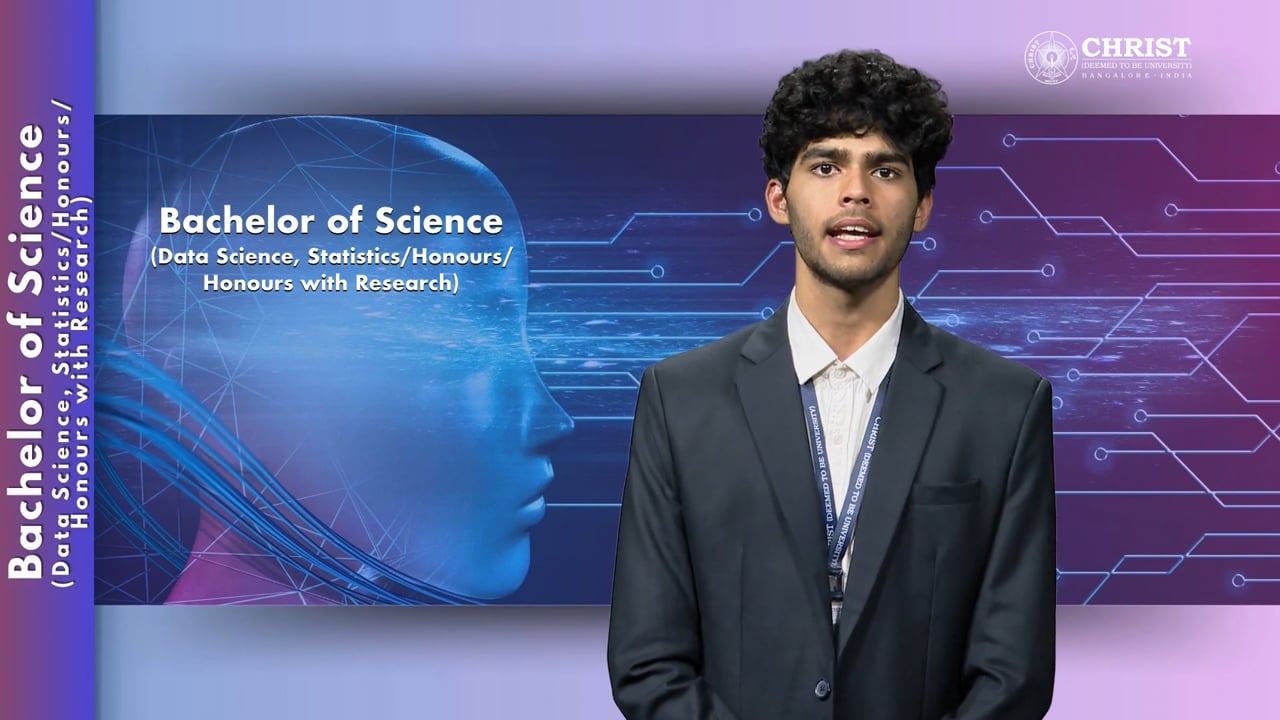
About the Programme
Comprehensive Curriculum
The programme offers a strong interdisciplinary curriculum integrating Data Science, Statistics, Mathematics. Students develop a solid foundation in statistical methods, data analytics, machine learning, data visualization, database management, predictive modelling. The curriculum is designed to equip students with both analytical and computational skills required for data-driven decision-making. The programme provides an excellent foundation for higher education
Hands-on and Application-Oriented Learning
The programme emphasizes experiential and project-based learning through practical laboratory sessions, coding exercises, statistical computing, industry-oriented projects, and case studies. Students gain proficiency in programming languages, statistical software, data visualization tools, and machine learning frameworks while working with real-world datasets from diverse domains such as healthcare, finance, marketing, and social sciences.
Research-Focused Education
The programme fosters a strong research culture by introducing students to research methodology, statistical investigation, data-driven problem solving, and advanced analytical techniques. Students are encouraged to participate in research projects, paper presentations, workshops, seminars, and innovation-driven activities that enhance critical thinking, analytical reasoning, and scientific inquiry.
Industry Exposure and Career Opportunities
Students gain exposure to contemporary industry practices through expert lectures, internships, industry projects, workshops, hackathons, and interactions with professionals from academia and industry. The programme prepares graduates for diverse career opportunities in analytics, artificial intelligence, research, and business domains. Graduates can pursue roles such as Data Scientist, Data Analyst, Statistical Analyst, Business Intelligence Analyst, Machine Learning Engineer, Data Engineer, Quantitative Analyst, Research Associate, Market Research Analyst, and AI Analyst across industries including technology, healthcare, finance, consulting, retail, and government sectors.
Why Choose This Programme?
Interdisciplinary Learning
The programme combines statistics, datascience, mathematics, and analytics to provide a strong multidisciplinary foundation.
Advanced Analytics & AI Skills
Students gain practical exposure to machine learning, Neural networks, artificial intelligence, predictive analytics, and data-driven technologies.
Strong Statistical Foundation
Develop expertise in statistical modelling, probability, and data interpretation for research and business applications.
Industry Exposure & Internships
Internships, industry projects, workshops, and expert sessions help students understand real-world applications of data science.
Research-oriented Curriculum
The programme promotes innovation, research projects, and analytical thinking through experiential learning opportunities.
Diverse Career Opportunities
Graduates can pursue careers in data analytics, business intelligence, finance, healthcare analytics, research, and technology sectors.
Choose Your Track
This programme opens diverse career pathways in Data Science, Data Analytics, Statistical Analytics, Business Intelligence, Machine Learning, Artificial Intelligence, Quantitative Analytics, and Research.
Data Analyst Junior Data Analyst Business Intelligence (BI) Analyst Data Visualization Analyst Statistical Analyst Market Research Analyst Financial Data Analyst
Data Scientist Machine Learning Engineer Artificial Intelligence (AI) Engineer AI Solutions Developer MLOps Engineer
postgraduate studies in Data Science Postgraduate in Statistics Postgraduate in Artificial Intelligence
What You Will Learn
Programme Structure
The programme structure outlines the academic curriculum designed to provide a systematic progression of learning through core subjects, electives, and practical components across semesters, ensuring both theoretical understanding and skill development.
Semester 1 — Foundations of Data Science, Statistics and Programming
Semester 2 — Computational and Statistical Foundations
Semester 3 — Data Management, Analytics and Intelligent Systems
Semester 4 — Machine Learning and Statistical Inference
Semester 5 — Advanced Analytics and Predictive Modelling
Semester 6 — Applied Data Science, Research and Industry Practice
Semester 7 — Advanced Statistical Modelling and Decision Analytics
Semester 8 — Modern Statistical Computing and Research Applications
Eligibility & Fee Structure
Career Paths
Your Career Roadmap
Select a specialisation track to explore the learning journey and career outcomes tailored to your chosen domain.
Sem 1 & 2: Junior data analyst, Data Associate, Reporting Analyst, Data Processing Executive, Business Data Assistant
Sem 3 & 4: Data Engineer, QA Tester, Data Visualization Analyst, ETL Developer, Business Intelligence Associate
Sem 5 & 6: Full Stack Data Analyst, Applied Analyst, Predictive Analytics Associate, Machine Learning Analyst, Decision Support Analyst
Sem 7 & 8: Explainable AI Analyst, NLP Associate, AI Governance Analyst, Security Analytics Associate, AI Solutions Consultant, LLM Application Developer
Sem 1&2: Junior Data Scientist, AI Associate, Data Science Intern, Junior Analytics Associate, AI Support Engineer
Sem 3&4: Machine Learning Engineer, Full Stack Data Scientist, AI Developer, Computer Vision Associate, Data Science Engineer
Sem 5&6: Applied Scientist, Research Scientist, Deep Learning Engineer, AI Solutions Engineer, Predictive Modeling Specialist
Sem 7&8: NLP Engineer, Explainable AI Specialist, AI Security Engineer,Generative AI Engineer, LLM Engineer, AI Product Engineer
Sem 1&2: Research Foundations, Scientific Inquiry, Literature Survey, Academic Project Assistant
Sem 3&4: Undergraduate Researcher, Statistical Analyst Intern, Data Science Research Intern
Sem 5&6: M.Sc./M.Tech. Entrance Preparation, Junior Research Fellow (Entry Level), Research Associate, Industry R&D Trainee, Ph.D. Aspirant
Sem 7&8: AI Research Assistant, NLP Research Associate, Explainable AI Researcher, Generative AI Research Associate, Responsible AI Researcher, Doctoral Research Trainee
Message from the HOD
Admission Process
- Register with your Email ID
- Login to the Admission Portal
- Fill the Application Form
- Pay Application Fee
- Entrance Test (If Applicable)
- Assessment
- Interview
- Check login page for result
- If selected, Offer Letter attached
- Pay Course Fee Online
- Complete Admission Process
Ready to Apply?
Applications are open. Deadline: 2026-11-25 23:45:00.