


About the Programme
The Doctor of Philosophy (PhD) in Statistics at CHRIST (Deemed to be University), Delhi NCR Campus, develops students as researchers to pursue careers as teachers in higher education or as scientists in the government or private sector. Technological advances have made it easier to collect big data and make correct decisions with the help of apt statistical models making Statistics one of the most sought-after fields of research in science today. The Department of Statistics is committed to excellence in teaching and research. The PhD programme in Statistics offered by the department enables students to develop novel statistical models, validate their statistical properties mathematically, and implement them in applied fields through collaborative interaction with researchers across applied disciplines.
Novel Statistical Model Development
The core of the PhD programme is training scholars to independently develop original statistical models tailored to real-world problems. Scholars learn rigorous model formulation, theoretical derivation of statistical properties, and simulation-based validation methods.
Big Data & Applied Statistical Decision Making
With technological advances enabling large-scale data collection across healthcare, finance, industry, and government, the programme equips scholars with statistical tools and frameworks to extract meaningful insights and support sound decision-making from big data environments.
Mathematical Rigour & Statistical Theory
Scholars develop a deep theoretical foundation mathematically validating the statistical properties of new models (consistency, efficiency, robustness, unbiasedness) and grounding their research in the classical and modern statistical theory that underpins the discipline.
Collaborative Applied Research
The PhD programme places strong emphasis on interdisciplinary collaboration. Statistics PhD scholars work alongside researchers from applied fields including biostatistics, econometrics, environmental science, social science, and engineering implementing novel statistical methods to solve domain-specific challenges.
Why Choose This Programme?
Statistics One of the Most Sought-After Research Fields : Technological advances in big data collection have propelled Statistics to the forefront of scientific research. A PhD in Statistics from CHRIST positions you in one of the most globally in-demand research disciplines, with applications spanning healthcare, finance, public policy, industry, and artificial intelligence.
Develop Original, Mathematically Validated Statistical Models : The PhD programme is specifically designed to train scholars to create novel statistical models from scratch formulating, mathematically validating their properties, and testing them in real-world applied contexts. This rare, rigorous capability is highly valued in academia and industry research alike.
Department Committed to Excellence in Teaching & Research : The Department of Statistics at CHRIST is committed to the highest standards in both teaching and research. Scholars benefit from a research culture that values precision, originality, and academic integrity guided by faculty with active publication records and domain expertise in diverse statistical fields.
Dual Career Pathways Academia & Industry : The PhD programme explicitly prepares scholars for two high-value career paths: teaching in higher education (as professors or lecturers at colleges and universities) and research-based roles as scientists in government organisations (e.g. NSSO, ICAR, ICMR, DRDO) or the private sector (data science, analytics, pharmaceutical research).
Applied Research through Interdisciplinary Collaboration : Statistics PhD scholars at CHRIST are encouraged to collaborate with researchers across disciplines implementing statistical methods in fields like biostatistics, agricultural science, social science, economics, and engineering. This applied focus ensures research impact that extends well beyond the statistics department.
Timely, Relevant Research in the Age of Big Data : As big data becomes central to decision-making in every sector, the ability to build, validate, and apply sophisticated statistical models is an invaluable skill. The PhD programme at CHRIST ensures scholars are at the cutting edge of statistical methodology equipped to work with modern data environments and computational statistical tools.
Choose Your Track
Focuses on developing and validating new statistical distributions, estimation theory, hypothesis testing frameworks, Bayesian methods, stochastic processes, and probability theory. Ideal for scholars pursuing academic careers in statistics or foundational research roles at statistical institutes.
Covers statistical modelling for real-world applications including regression and multivariate methods, survival analysis, clinical trial design, epidemiological modelling, environmental statistics, agricultural statistics, and econometrics. Ideal for scholars aiming for roles in government research, pharmaceutical companies, health organisations, and applied research institutions.
Explores statistical machine learning, high-dimensional data analysis, time series modelling and forecasting, statistical computing (R, Python, SAS), Bayesian computation (MCMC), and statistical methods for big data platforms. Ideal for scholars targeting data science leadership roles, analytics firms, or interdisciplinary research at the intersection of statistics and computing.
What You Will Learn
Eligibility & Fee Structure
Career Paths
Message from the HOD
Delhi NCR Campus
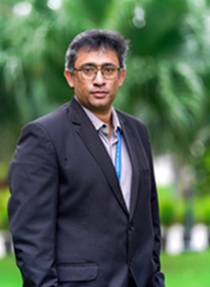
Welcome to the Department of Computational Sciences, CHRIST(Deemed to be University), NCR Campus. Soon, India will be a talent provider to the world of computational sciences. To meet the demanding educational requirements in the field of sciences and preparing young minds to set a high benchmark in society, the University has started the School of Sciences with the Department of Computational Sciences as a separate wing. The mission of the budding department is to utilize the power of computational sciences to mould the young minds, to take up the challenging industry innovations for the betterment of society. Computational Science has marked its importance in our professional and personal life.
The curriculum is designed to
Message from the HOD
Welcome to the Department of Computational Sciences, CHRIST(Deemed to be University), NCR Campus. Soon, India will be a talent provider to the world of computational sciences. To meet the demanding educational requirements in the field of sciences and preparing young minds to set a high benchmark in society, the University has started the School of Sciences with the Department of Computational Sciences as a separate wing. The mission of the budding department is to utilize the power of computational sciences to mould the young minds, to take up the challenging industry innovations for the betterment of society. Computational Science has marked its importance in our professional and personal life.
The curriculum is designed to impart in-depth subject knowledge, problem-solving skills, personal grooming, and research aptitude. A well-qualified teaching staff with Ph.D. in the various domain will help the students to guide them in different latest areas of computing. Apart from the regular classroom sessions, the department pays attention to the holistic development of an individual. The students also get an opportunity to organize and coordinate various levels of department and university activities like corporate interfaces, fests, seminars, workshops, etc. The student community is also encouraged to be part of various science club activities for broadening their enthusiasm for Science. I am sure that the world-class facilities available to the students, the unending support of a team of dedicated teachers, the various co-curricular, extra-curricular activities available in each semester, and the fully engaged campus life will mould the students to face the challenges ahead in a matured manner.
Thank you for your interest and support
Dr. Bosco Paul Alapatt
Admission Process
- Register with your Email ID
- Login to the Admission Portal
- Fill the Application Form
- Pay Application Fee
- Entrance Test (If Applicable)
- Assessment
- Interview
- Check login page for result
- If selected, Offer Letter attached
- Pay Course Fee Online
- Complete Admission Process
Ready to Apply?
Applications are open. Deadline: 2026-11-29 23:45:00.